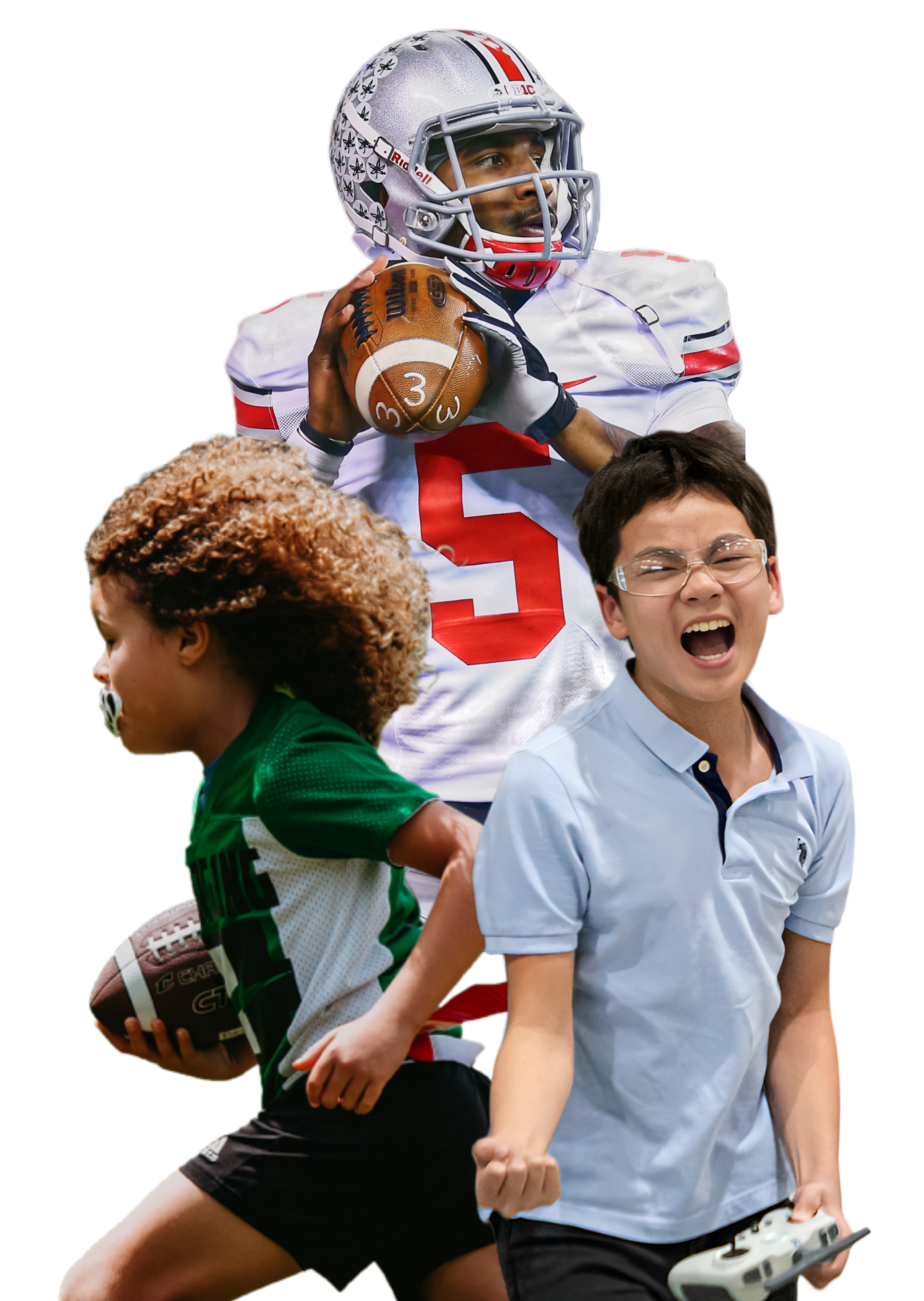

Youth sports are splitting into two Americas, one with elite training and travel teams, the other left on the sidelines entirely. Here's why community-based programs matter more than ever, and why the cost of inaction is growing every year.
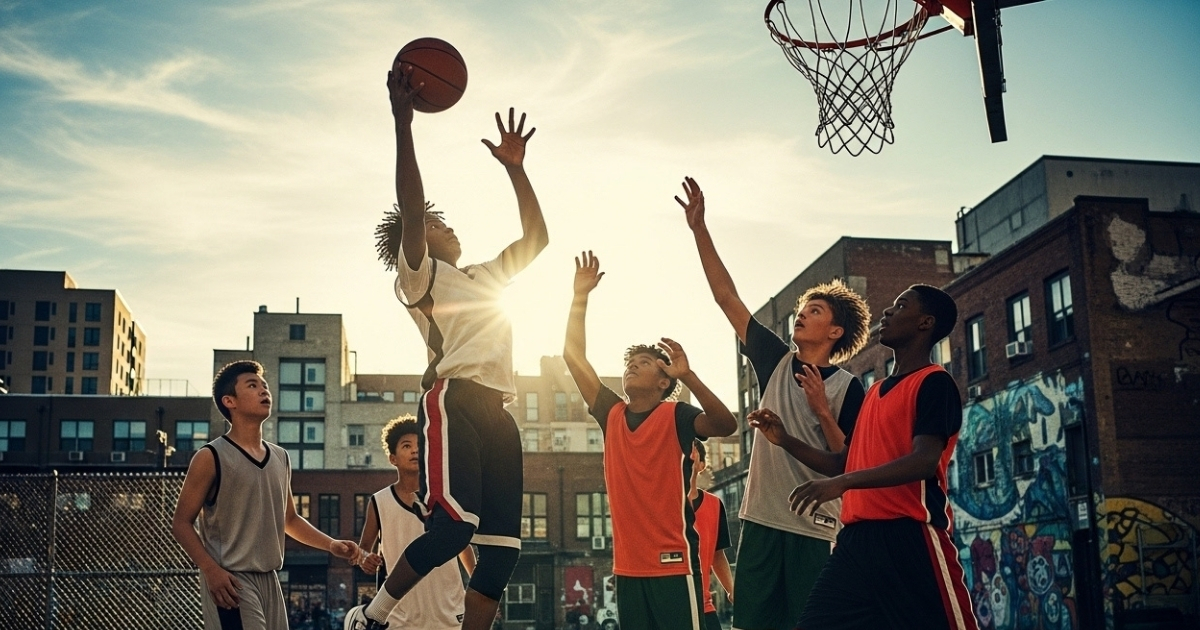
Optional image caption.
The numbers tell a story we can't ignore.
Youth sports participation in the United States has reached 55.4%, the highest rate since before the pandemic. More kids are playing organized sports than at any point since 2019. On the surface, that looks like progress.
But look closer, and a different picture emerges.
The cost of youth sports has increased 46% since 2019. The participation gap between low-income and high-income households has widened to 20.2 percentage points, up from 13.6 points in 2012. Children from families earning under $25,000 annually are five times less likely to participate in sports than their wealthier peers.
We're watching youth sports split into two Americas: one where children have access to elite training, travel teams, and year-round development and one where kids are left on the sidelines entirely.
This isn't just a sports problem. It's a public health crisis, an equity issue, and an economic challenge all wrapped into one.
And it's exactly why youth sports matter more in 2026 than ever before.
A landmark study published in the American Journal of Preventive Medicine found that reaching the federal government's goal of 63% youth sports participation by 2030 could save the United States $80 billion in direct medical costs and productivity losses, and deliver over 1.8 million more quality years of life to Americans.
That's not hyperbole. That's peer-reviewed research.
The savings come from two sources: physical health and mental health.
On the physical side, increased sports participation could prevent 352,000 cases of weight-related diseases including type 2 diabetes, coronary heart disease, stroke, and certain cancers across a single youth cohort's lifetime. Childhood obesity rates have tripled in the past three decades, disproportionately affecting Black and Hispanic communities, the same communities most likely to be priced out of organized sports.
On the mental health side, the evidence is equally compelling. Research from Ohio State University shows that adults who played organized sports continuously through their youth have fewer symptoms of anxiety and depression than those who never played, or those who dropped out. The Women's Sports Foundation found that mental health disorders are 1.5 to 2.5 times lower for girls who play sports compared to those who never played.
In a country grappling with a youth mental health crisis, where one in five adolescents experiences a mental health disorder, sports aren't a luxury. They're a lifeline.
Here's what keeps me up at night: we know sports work. We have decades of research proving their benefits. And yet, the children who need these benefits most are the least likely to receive them.
The Aspen Institute's State of Play 2025 report documents a troubling trend. While overall participation rebounds, the gap between those who can afford to play and those who cannot continue to widen.
Consider these data points:
The shift from school-based sports to private club models has created what researchers call a "pay-to-play" system. For families without extensive financial means, the doors to organized sports are closing.
This matters beyond the playing field. Sports participation correlates with higher GPAs, lower dropout rates, better test scores, and improved college admission outcomes. When we price kids out of sports, we're not just denying them a game, we're limiting their futures.
The market alone won't solve this problem. Premium destination sports complexes and elite travel programs serve families who can afford them. But they don't reach the kids in underserved neighborhoods who have the most to gain.
That's where community-based organizations step in.
At The Braxton Miller Foundation, we've seen what happens when you remove barriers. When registration fees aren't prohibitive. When programs exist in the communities where kids actually live. When coaches are trained not just in skills development, but in character building and mentorship.
We've watched kids who showed up nervous and uncertain become team captains. We've seen students who struggled in school find confidence on the court that carried over into the classroom. We've witnessed families connect with each other and with their community through the simple act of showing up to support their children.
These aren't isolated stories. They're the predictable outcomes of accessible, quality youth sports programming.
The research backs this up. A 2025 meta-analysis published in the International Journal of Behavioral Nutrition and Physical Activity found that youth sport participation has positive, statistically significant effects on physical activity, health, and wellbeing, effects that persist into adulthood.
But here's the key finding: the benefits depend on the quality of the experience. Programs that prioritize fun, inclusion, and development over winning at all costs produce better long-term outcomes. Nearly half of kids who drop out of sports cite "not having fun" as the reason. A third said they felt "not good enough."
Community-based programs that center the child's experience, rather than adult ambitions, are the antidote.
If you're a donor, foundation, or corporate partner reading this, here's what I want you to understand: investing in youth sports is investing in public health, educational outcomes, workforce development, and community resilience all at once.
The Aspen Institute estimates that $30-40 billion was spent by families on youth sports before the pandemic. Even if that investment doubled, the return would still exceed the cost in medical savings and productivity gains alone.
But that calculation misses the human element.
It misses the 12-year-old who learns resilience after losing a close game. The teenager who develops communication skills by calling plays. The young person who discovers discipline through early morning practices. The kid who finally feels like they belong somewhere.
These are the outcomes that don't show up in economic models but shape the trajectory of lives.
In 2025, Illinois became the first state to create a statewide youth sports commission focused on quality, access, and equity. California is studying whether to establish a Department of Youth Sports. The U.S. Conference of Mayors, National League of Cities, and National Recreation and Park Association all endorsed the Children's Bill of Rights in Sports.
The momentum is building. Policymakers are paying attention. The question is whether private philanthropy and corporate investment will match the moment.
At The Braxton Miller Foundation, our work sits at the intersection of sports, STEM education, and mentorship. We believe that developing the whole child, not just the athlete, creates lasting impact. We operate in communities across Ohio where access gaps are real and where every dollar stretches further.
But this isn't about any single organization. It's about recognizing that youth sports are infrastructure, as essential to healthy communities as schools, parks, and healthcare facilities.
The kids who participate in sports today will become the leaders, employees, parents, and community members of tomorrow. The habits they build, the relationships they form, and the confidence they develop will compound over decades.
We can either invest in that future now, or pay the costs of inaction later.
The research is clear. The need is urgent. The opportunity is here.
Youth sports matter in 2026 because our children matter. And right now, too many of them are being left behind.
Braxton Miller is a former Ohio State quarterback and NFL veteran. He founded The Braxton Miller Foundation to empower young people through sports, STEM education, and mentorship. Learn more at thebraxtonmillerfoundation.org.
New stories, program updates, and insights about youth sports, STEM, and mentorship delivered when we publish.