

Why do we keep separating the court from the classroom? Sports and STEM aren't competing priorities, they're a reinforcing system. Here's why the combination works, and why it matters for the next generation of talent.
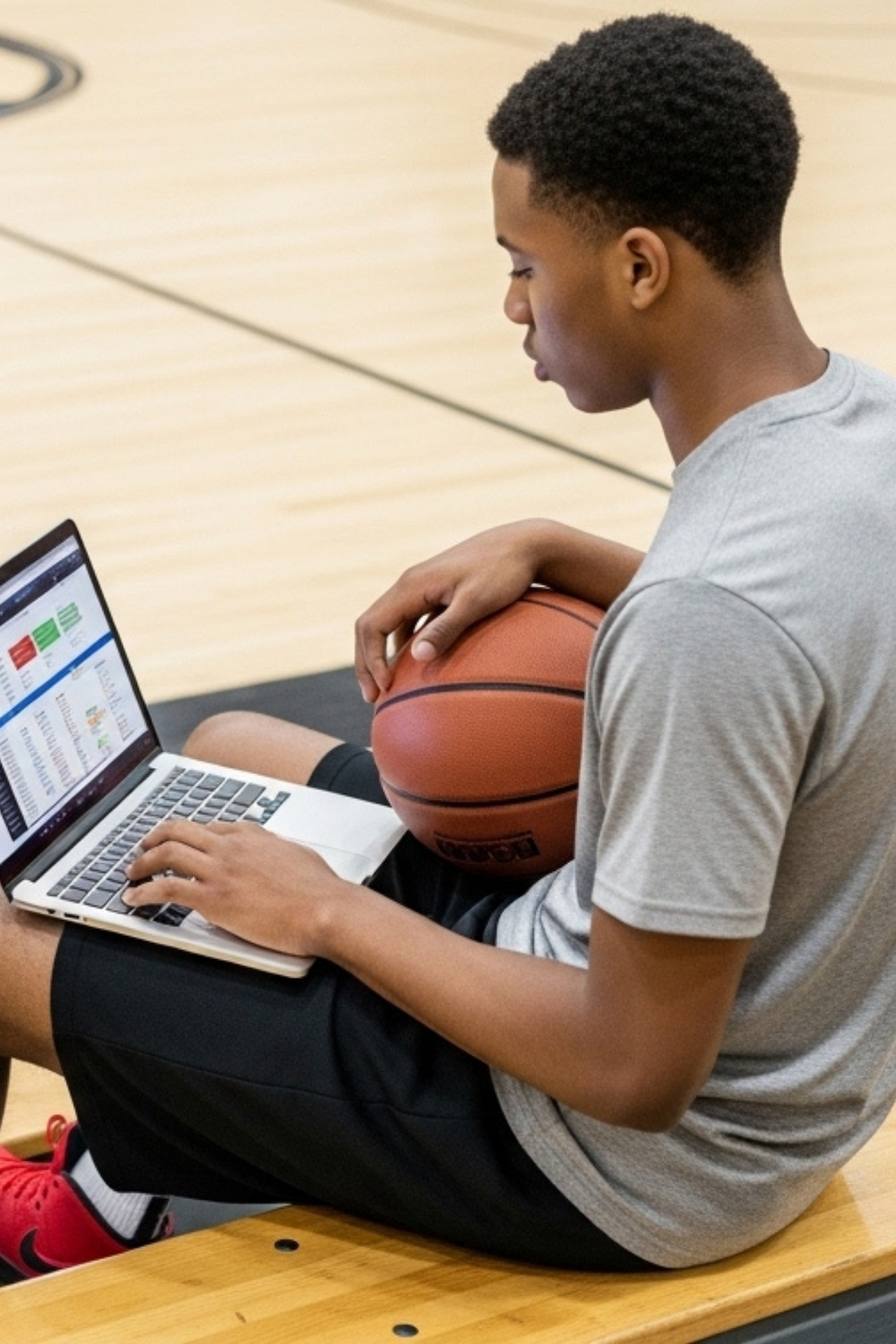
Optional image caption.
The Case for Investing in Programs That Develop The Whole Child
Here's a question we don't hear often enough: Why do we separate the court or field from the classroom?
At The Braxton Miller Foundation, we've made a deliberate choice to combine sports programming with STEM education. Not because it's trendy. Because it works.
The research supports it. The outcomes prove it. And for companies looking to make strategic investments in youth development and workforce readiness, the combination offers something neither approach delivers alone.
Let's start with what's at stake.
STEM occupations are projected to grow 10.4% between 2023 and 2033, more than double the 4% growth rate for all occupations. The median annual wage for STEM workers is $101,650, compared to $48,060 for non-STEM jobs. The opportunity is clear.
But so is the problem: the pipeline isn't keeping up.
The U.S. faces a projected shortage of 1.4 million STEM workers by 2030. Black workers make up 11% of the total workforce but only 9% of STEM occupations. Hispanic workers represent 17% of all jobs but just 8% of STEM roles. Women comprise only 28% of the STEM workforce.
The gap isn't about ability. It's about access, and it starts early.
Only 20% of high school graduates are prepared for college-level coursework in STEM majors. Federal investment in STEM diversity efforts focuses heavily on the college level, leaving a critical window at K-12 largely unaddressed.
By the time many young people reach college, the opportunity has already passed.
This is where athletics enter the picture, not as a distraction from academics, but as a delivery system for the skills that make learning possible.
Youth sports participation has been linked to improved self-esteem, better social skills, and reduced involvement in risky behaviors. A recent meta-analysis found that youth sport participation has positive effects on physical activity, health, and wellbeing that persist into adulthood.
But the benefits go deeper than physical health.
Sports teach discipline. They require showing up, putting in repetitions, and pushing through difficulty. They demand teamwork, communication, and the ability to perform under pressure. They build resilience, the capacity to fail, adjust, and try again.
These aren't soft skills. They're the foundation for everything that comes next.
Research from sport-based positive youth development programs shows that structured athletic activities can improve social integration, self-efficacy, and sense of belonging, particularly for young people from underserved communities.
Here's what we've learned: sports create the conditions for learning.
A young person who has just experienced the discipline of practice, the accountability of being part of a team, and the confidence that comes from improvement is better positioned to engage with challenging academic content.
STEM education requires persistence. It requires comfort with failure. It requires the willingness to work through problems that don't have obvious solutions.
Sound familiar?
When we combine sports and STEM, we're not just filling time with two separate activities. We're building a reinforcing system where the lessons from one domain strengthen performance in the other.
The discipline learned on the court transfers to the coding exercise. The problem-solving developed in a robotics session shows up in how a young athlete reads the defense. The confidence built through mastering a new skill, whether that's a jump shot or a programming language, compounds.
For corporate sponsors and foundations evaluating where to direct resources, STEM + Sports programs offer several advantages:
1. Dual-track outcomes. You're not choosing between physical development and academic preparation. You're funding both.
2. Access to underserved populations. Sports programs often reach young people who wouldn't otherwise engage with formal STEM education. The basketball court or football field becomes the entry point to broader opportunity.
3. Workforce pipeline development. If your company needs STEM talent, and the data suggests you do, investing in K-12 programs that build both capability and interest creates long-term returns.
4. Community engagement. Sports have built-in visibility and community connection that pure academic programs often lack. Sponsoring a program that includes athletics means your investment shows up at games, events, and in the daily lives of families.
5. Measurable impact. Participation rates, skill assessments, academic progress, and program completion all provide concrete metrics for evaluating return on investment.
At The Braxton Miller Foundation, our approach is intentional. We don't just run basketball clinics and then offer a separate coding class. We integrate the two, using sports as the hook and the vehicle, while embedding STEM concepts and skills throughout.
Our programs serve young people across Ohio, many from communities where access to both quality athletics and STEM education is limited. We're working to change that.
But we can't do it alone.
The STEM workforce gap is a national challenge. Closing it requires investment at the community level, in programs that reach young people early, meet them where they are, and build the complete set of skills they need to succeed.
Sports alone won't solve the workforce crisis. STEM education alone won't either. But together, they create something more powerful than either component delivers on its own.
If your company is looking for ways to invest in youth development, workforce readiness, or community engagement, we'd welcome a conversation.
We're not asking for charity. We're offering a partnership, one that connects your organization to the next generation of talent while making a measurable difference in young people's lives.
The work is happening. The model is proven. The question is whether we can scale it.
Ready to get involved? Visit thebraxtonmillerfoundation.org to learn more about partnership opportunities.
The Braxton Miller Foundation serves youth across Ohio through sports, STEM education, and mentorship programs. Founded in 2021, the Foundation has spent five years removing barriers between young people and opportunity.
New stories, program updates, and insights about youth sports, STEM, and mentorship delivered when we publish.